
The parent trap: is your organisation helping parents thrive, not just survive?
This blog covers key insights from our recent Evolution of Work Summit webinar, featuring leaders from Microsoft, BAE Systems, and Camunda. Together, the panel explored a critical question: How can we create workplaces where parents thrive—not just survive?
7th Jan 2024
At the end of 2024, we hosted Flexa's Evolution of Work Summit webinar, where an exceptional panel of industry leaders came together to tackle a vital question: How can we create workplaces where parents thrive—not just survive?
In this blog, we’ll recap the main takeaways from the discussion and share actionable insights to help create more supportive and inclusive workplaces for parents.
Our expert panel included:
- Tom Kenward (Talent Acquisition Lead UK, Microsoft)
- Harriet Eacott (Engineering Manager, BAE Systems)
- Corey Hunter (Senior People Business Partner, Camunda)
- Beth Carter (Flexa) as moderator
Together, we explored:
- Building cultures where family policies are embraced, not just available
- Creating flexibility that works for both business and families
- Driving meaningful change through employee-led initiatives
- Transforming parent support from policy to practice
The modern workplace is evolving, and with it, is our approach to supporting working parents. Gone are the days when having family-friendly policies on paper was enough. Today's leading organisations are creating environments where using these policies is second nature – where parents don't just survive, but truly thrive.
What parents really want: breaking down the data
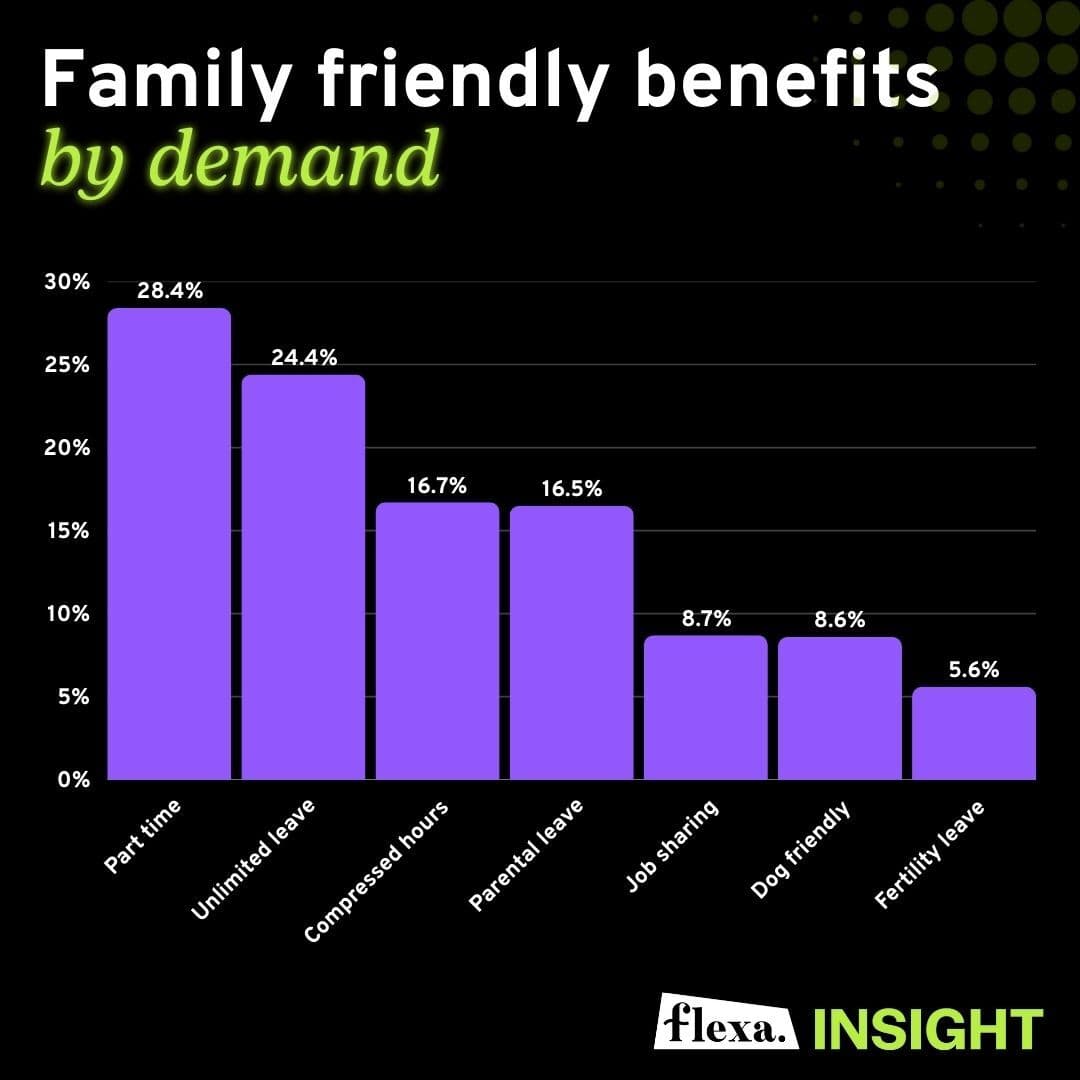
When it comes to creating truly family-friendly workplaces, flexibility and time autonomy top the list for working parents. Part-time roles (28.4%) and unlimited leave (24.4%) are the most sought-after benefits, showing just how much parents value the ability to manage their time around family life.
Compressed hours (16.7%) and enhanced parental leave (16.5%) follow closely behind, highlighting the ongoing importance of alternative schedules and dedicated support during key moments in family life.
While options like job sharing (8.7%), dog-friendly offices (8.6%), and fertility leave (5.6%) are less widely requested, they’re still important for specific groups—proving that a one-size-fits-all approach doesn’t work. To truly support working parents, companies need to offer diverse, flexible benefits that can adapt to people’s needs throughout every stage of life.
Why supporting parents is good business
The business case for supporting working parents has evolved far beyond basic compliance. Our panel emphasised that creating parent-friendly workplaces delivers tangible benefits across multiple dimensions:
- Enhanced retention: organisations see measurable improvements in retention rates when employees feel supported in managing their family responsibilities
- Increased productivity: when parents can effectively balance work and family life, productivity levels show notable improvement
- Stronger engagement: companies report that team members feel more committed to their roles and are more likely to stay long-term
- Improved employer brand: organisations that demonstrate genuine commitment to supporting working parents become more attractive to top talent
- Next-gen appeal: This approach particularly resonates with younger generations who increasingly prioritise work-life integration in their career decisions
Key Trends Reshaping Parent Support
Flexible parental leave
Modern parental leave policies are becoming increasingly adaptable, moving away from rigid structures to offer:
- Leave that can be taken in blocks throughout the year
- Flexibility that allows parents to be present for key developmental moments
- Inclusive coverage for all family structures, including single parents and LGBTQ+ families
- Options that help maintain career momentum while supporting family needs
Comprehensive support systems
Support now extends well beyond traditional leave policies to include:
- Dedicated Employee Resource Groups
- Mental health resources
- Practical assistance with childcare
- Ongoing support systems that recognize parenting challenges don't end when leave does
Cultural transformation
Organisations are focusing on fundamental cultural change through:
- Leadership teams actively modeling flexible working practices
- Manager training for better parent support
- Regular policy reviews to maintain relevance
- Open dialogue about parenting challenges
- Normalisation of work-family life integration
Spotlight on innovation: companies leading the way with family-friendly policies
Microsoft's family-first framework
Microsoft demonstrates how large organisations can create comprehensive support systems:
- Nationwide childcare reimbursement program replacing location-specific benefits
- Four weeks of fully paid caregiver leave annually for all employees
- Partnership with Maven for parenting support and counseling
- 24 free counseling sessions annually for employees and family members
- Return to work coaching and breastfeeding facilities
- Inclusive definition of family structures in all policies
"At BAE Systems we have a peer-to-peer support group called the Working Parents Group, which is part of our Gender Equity Network – supporting our efforts to create an inclusive and equitable environment for all. This group aims to support working parents and prospective parents through their parental journey and to enable them to bring their best selves to work within BAE Systems through a supportive network that provides guidance, knowledge sharing and open conversation within a safe space.
Since launching in 2024, they have provided working parents and prospective parents with a community that fosters a sense of belonging through a variety of means:
- Sharing policies: At BAE Systems we have a variety of policies that are in place to support our employees. These include but are not limited to Parental Leave, Shared Parental Leave, Work Life Integration, Flexible Working, Time Off for Dependents, Unpaid Parental Leave and Carers Leave. The Working Parents Group share these policies with their members to keep them informed of the provisions available to them.
- Webinars: The Working Parents Group host webinars to build connection, trust and understanding between peers. The topics of these events vary from lived experiences, HR updates on how to access our provisions and external guest speakers who have an inspiring story to tell.
- Parental Buddies: Parental Buddies is an initiative that pairs Working Parents together to build a support network for those that would benefit from contact with other Working Parents. Having someone to talk to; whether that is to offer a warm welcome back after parental leave, sharing experiences of a certain moment in their journey or having someone to chat to, having a parental buddy is a great way to connect with others."
"At HEINEKEN UK, we’ve established our Working Parents & Carers Network as part of the wider Women & Allies network. It’s a space for colleagues to connect, share experiences, and learn from others in similar situations. We host bi-monthly virtual coffee catch-ups where parents and carers can offer advice, tips, and provide support. These sessions help colleagues balance family life while continuing to grow their careers, so we can all thrive at work and at home.
We have a range of family-friendly policies in place, including our Partner Leave, Pregnancy and Baby Loss, Parental Leave, Maternity Leave, Fertility Treatment, Shared Parental Leave and Adoption Leave policies. These were reviewed and improved in early 2024 following colleague feedback, to better support a broader range of circumstances.
We also offer flexible working arrangements, such as compressed hours, job shares and part-time roles, which are available and encouraged across all levels of the organisation. We’ve seen uptake from both male and female colleagues adapting their working patterns to better suit their family needs.
Our ‘Maternity Buddies’ scheme pairs colleagues with a buddy during their maternity leave, providing a consistent point of contact and helping them feel supported while away. Promoting this initiative will be a key focus for the Parents & Carers Network this year.
Colleagues can also take up to 10 paid Keeping In Touch (KIT) days during maternity leave to stay connected and make the return to work smoother. On return, leaders reintroduce them to key stakeholders, and wider teams are encouraged to reach out. Ongoing support is provided through Line Managers and our People Teams.
The option to record meetings, where appropriate, has also made a big difference. It supports flexible working by allowing parents and carers to stay connected and catch up on conversations they may have missed due to family commitments, helping to foster a more inclusive and connected culture.
We’re proud to support working parents at HEINEKEN UK through creating an environment where colleagues can thrive in their family life and their career."
Tombola
"Tombola is committed to building family-friendly workplaces. One of the ways we do this is by providing support and guidance to parents on various topics. Recently, we brought together colleagues from across the Flutter UKI division to watch a webinar on neurodiversity, specifically ADHD.
The speaker’s insights resonated with many attendees, especially parents of neurodivergent children. The experiences shared reflected the challenges that many on the call were facing, helping them feel less alone. It reinforced the message that, with the right support and resources, both they and their children can thrive.
These companies demonstrate how combining comprehensive policies with cultural support creates environments where parents can truly thrive."
BT Group
“At BT Group we strive to create an inclusive culture for all parents so they can be there for the moments that matter. That’s why from January this year, we started offering equal family leave to all parents, no matter how their family is made up. That’s 18 weeks full pay, 8 weeks half pay, 6 months statutory. For caregivers, we also offer 2 week’s paid leave. Whilst our standard flexible working policy is 3 days in the office, 2 days working from home, we also offer additional working options for some of our roles, including being open to part time and job sharing. We also put a lot of trust and autonomy in our colleagues. They can have open conversations with their managers to check what formal or informal working arrangements could work for both parties.”
OVO’S Parent Club lead, Andrea Clark, shares her experience on becoming a parent and how OVO has supported her.
“Becoming a parent has been the most incredible adventure and I truly believe my workplace has been instrumental in making it a positive experience. Right from the start, I appreciated the fuss-free flexibility our progressive people policies offer. I had the autonomy to book my antenatal appointments around my work, simply by keeping my team and calendar updated. As a home worker during pregnancy, my well-being was prioritised through a straightforward DSE assessment, and I easily got the equipment I needed, including a sit-to-stand desk. When it came to arranging my leave, the maternity options available allowed me to have the best start with my baby. Plus, I was also able to continue spending time with him as he grew thanks to the 80% return to work option.
The thought of returning after a year felt terrifying, but knowing that counselling and mindfulness resources were available through Aviva was reassuring. My manager was also fantastic in arranging flexible working hours, which has given us more family time and helped reduce childcare costs. On my return, I felt so welcomed and given the same opportunities as if I had never been away.
We have used Aviva to have an urgent weekend appointment when my boy was ill and we needed the support. To gain more time with my family, I buy the additional flex holiday for time for myself and have added a life insurance policy for my husband so I know we will be secure if the worst should happen."
Adaptavist Group
At The Adaptavist Group, we already offered enhanced parental leave, but our policy hadn’t been reviewed in several years. Notably, our parental leave was tied to tenure, which unintentionally created inequity, particularly for newer team members. Through open dialogue and feedback, including valuable input from our active employee resource groups, it became clear that we needed a more inclusive, transparent, and supportive parental leave offering. As an employer committed to supporting our team members throughout their parenthood journey, we’ve taken steps to ensure our parental leave policy is more equitable and accessible, and we now offer:
Six months of fully paid leave for birthing parents, available immediately after probation, regardless of location.
Three months of fully paid leave for non-birthing parents, also available after probation, helping to share caregiving responsibilities more equally.
We’ve also introduced a buddying system for returning parents, pairing them with colleagues who’ve walked that path themselves — creating space for empathy, shared wisdom, and smoother transitions back into work.
The power of Employee Resource Groups (ERGs)
ERGs have emerged as powerful catalysts for organisational change. These groups:
- Provide vital feedback channels between parents and leadership
- Create safe spaces for sharing experiences and advice
- Help shape company policies through direct feedback
- Support diverse parenting experiences and family structures
Looking to the future
The future of parent support in the workplace is evolving rapidly. Key trends to watch include:
- Expanded mental health support encompassing whole-family wellbeing
- Evolution of flexible and remote working options
- Innovative solutions to address rising childcare costs
- More inclusive policies reflecting diverse family structures
- Technology integration for better work-life balance
Creating workplaces where parents thrive isn't just about having the right policies – it's about building environments where using them is encouraged and celebrated. As we continue to evolve our understanding of what working parents need, organisations that adapt and respond will find themselves better positioned to attract and retain top talent while building stronger, more resilient workforces.
This blog was inspired by insights from our recent Evolution of Work Summit webinar. Interested in exploring more? Here are some of the additional sessions from the summit:
- Cultural DNA: Unlocking aligned talent with your unique company identity
- Beyond the Numbers: Humanising data to drive meaningful workplace change
- Mission Possible: Transforming corporate purpose into an irresistible EVP
- Breaking Barriers: Revolutionising inclusive hiring for a diverse tomorrow
You can watch all the sessions here.