

Flexible working is a catalyst for innovation, not a blocker
In this blog we'll explore how remote work, flexible hours, and adaptable workspaces can empower employees to think creatively, collaborate effectively, and bring fresh ideas to the table.
30th Apr 2024
In this blog we’re talking about why companies should stop using flexible working as an excuse for lack of innovation. Companies that embrace flexible workings not only give their employees greater autonomy and work-life balance but also create an environment where innovation and productivity thrive. It’s a win-win for everyone!
Nike's CEO recently blamed remote working for the company’s innovation struggles. But let's face it, brands like lululemon, Under Armour, adidas, and Salomon have all stolen Nike's market share in the past. All whilst Nike was in the office 👀
It's time to look at the bigger picture. Blaming flexible working in the short term will only set us back, especially when we look at the progress we've made toward creating more inclusive workplaces and a sustainable future of work.
In this blog we will look at :
- How large enterprises are becoming increasingly flexible
- How flexibility improves innovation and productivity
- 6 ways to improve innovation with flexible working
Large enterprises are becoming more flexible
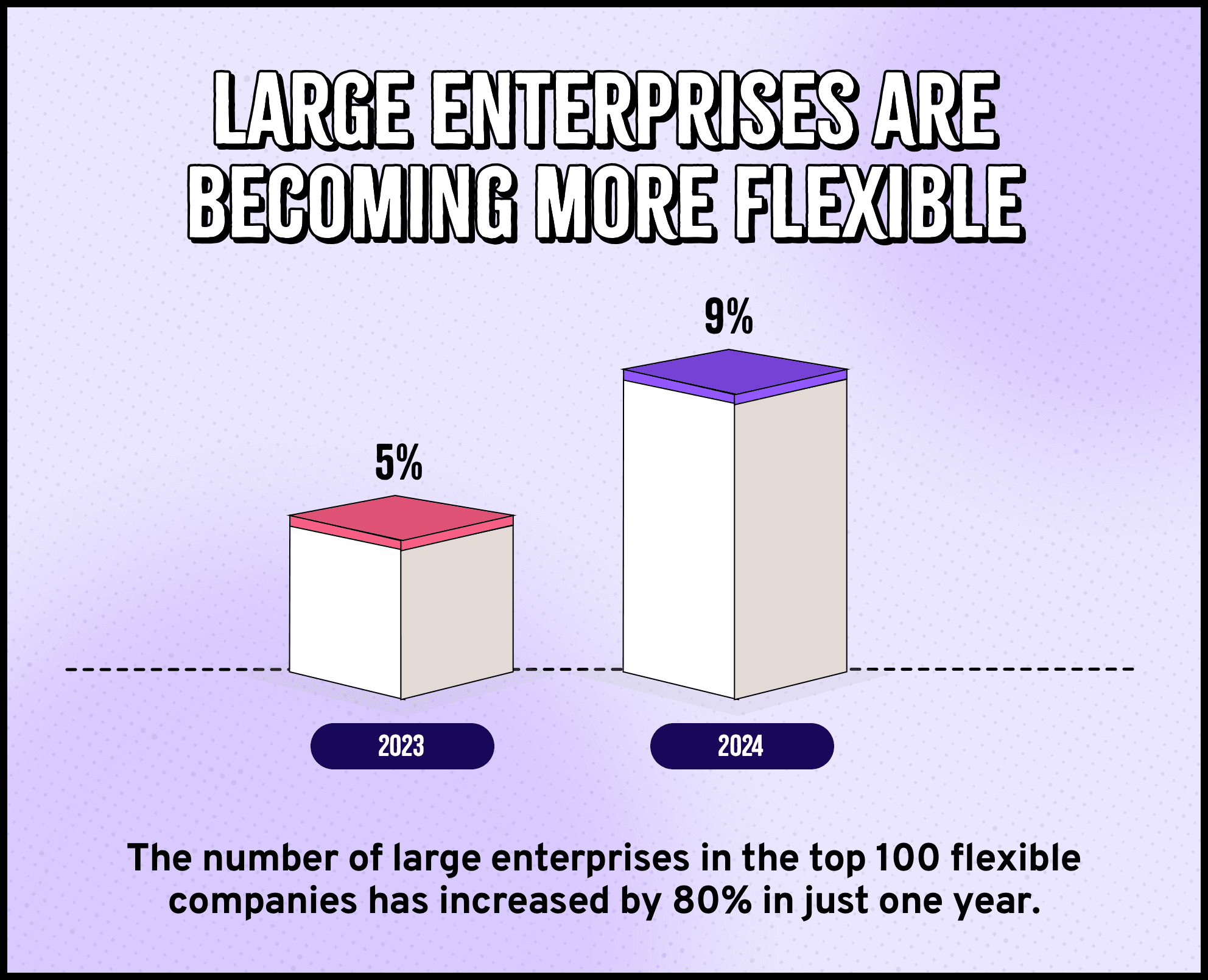
Most notably, nearly 1 in 10 (9%) of the top 100 most flexible companies employ over 1000 people, bucking the trend for corporates clawing back on flexibility. The most flexible large enterprises include Centrica, Mondelēz International and Microsoft. This marks a staggering 80% increase in the number of large enterprises making the ranking compared to last year, when just 5% of companies listed in the top 100 had more than 1000 employees.
Large companies constantly need to innovate to stay ahead, and flexible working isn't stopping them. By offering flexible work arrangements, such as remote work options, flexible hours, and job sharing opportunities, these companies empower their employees to work in ways that suit their lifestyles while driving innovation and productivity. It's not one or the other.
How does flexible working fuel innovation?
When it comes to innovation, flexible working is a catalyst not a blocker. But don’t just take my word for it.
There have been a number of studies that have revealed innovation is not impacted by where we work. A recent study by Frontiers showed just that.
This study looked at how employees contribute to organisations by creating, sharing, and using knowledge to add value. It was made up of employees working in various roles such as Research and Development (R&D), Design Engineering, Production management, Marketing and HR.
Here are the top 3 takeaways the research found when looking at how flexible working arrangements impacted innovative behaviour.
1. It gives employees more autonomy to innovate
The study found giving employees more autonomy over when and where they work encouraged employees to invest their time and energy into coming up with new ideas. Employees found that flexible working gave them a sense of control, increasing their motivation and drive for self-fulfilment through work. This, in turn, boosts their willingness to innovate. The findings show that flexible working is not just a management system that can be used to improve employees’ work satisfaction; it can also activate innovative behaviour in employees.
2. Employees have more energy and motivation to innovate
The research revealed that when employees have strong experiences of autonomy, they have more motivation and energy to put their creative ideas into action. By being able to manage their time more effectively, employees can allocate energy towards tasks that align with their strengths and interests. As a result, they feel more motivated and empowered to drive innovative solutions, leading to higher levels of creativity and productivity.
3. HR policies make a difference
The research found that HR policies that provide opportunities (like job sharing) have a positive effect on innovation. It's all about creating an environment where creativity can happen!
6 ways to improve innovation with flexible working
So, how exactly do you put all this into action and make sure your workplace is set up to encourage innovation. Here are five steps to help you get started:
- Create a culture of autonomy: Allowing employees to work and how and when they want will encourage autonomy in work practices, meaning employees can manage their time and tasks independently. By doing this they will have more control and time to focus on innovation and creativity.
- Invest in your remote tech: Implement technology that facilitates seamless communication and collaboration among remote teams. By having the right tech you can collaborate better on innovative projects and make sure ideas and creativity is captured. Of course an in person post its and sharpie session is great to get the creative juices flowing but there is no reason why you can’t replicate this online. We recently shared a guide on 4 tech tools you need when working remotely, this is a good starting point.
- Encourage experimentation: Create a culture that values experimentation and risk-taking, allowing employees to explore new ideas and approaches. Just because you are working flexibly doesn’t mean experimentation can not happen. In fact it can happen quicker. I’ve seen first hand at Flexa the speed at which we’ve managed to move new projects along compared to when I was fully in office.
- Lead by example: If you’re wanting your team to be more innovative and take risks you need to lead by example and show that you champion this behaviour. By regularly reinforcing this approach in team meetings and updates you will automatically create an experimental culture where your employees are not afraid to bring new ideas to the table and run with them.
- Celebrate and reward innovative ideas: Make sure you celebrate both the small and big wins when it comes to innovative ideas, even the ones that don’t work out. It's important to recognise and champion innovative ways of working, as it encourages your employees to keep experimenting. That's the beauty of innovation!
- Organise team offsites: Working flexibly doesn’t mean you never see each other. You’re just more selective about when and why. Team offsites are a perfect way to bring the team together, whether to get the creative juices flowing or to focus on some deep work for a particular project.