Inclusive Work Environments For The LGBTQ+ Community 🏳️🌈
9th Jun 2021
Over the years, we’ve seen great change in attitudes towards the LGBTQ community and increasingly, employers are waking up to the fact that, to succeed, they need to create an environment in which their staff feel confident to openly be themselves at work.
But sadly, not every LGBTQ person feels supported by their employer. Many LGBTQ people, and trans people in particular, still face anti-LGBTQ discrimination and even bullying at work. A report by Stonewall and YouGov’s state of the nation LGBTQ in Britain series, highlights just how much more progress needs to happen before every LGBTQ person in Britain feels accepted for who they are at work.
Their findings reveal that many LGBTQ employees don’t feel comfortable disclosing their identity at work, and often those who do are subject to discrimination and abuse, with incidents ranging from offensive language to being outed at work without their consent. And for Black, Asian or minority ethnic, trans or disabled individuals, the likelihood of facing harassment and discrimination in the workplace is even greater.
So what kind of discrimination are Britain’s LGBTQ workforce facing?
- Almost one in five LGBTQ staff (18%) have been the target of negative comments or conduct from work colleagues in the last year because they're LGBTQ.
- One in eight trans people (12%) have been physically attacked by customers or colleagues in the last year because of being trans.
- One in ten Black, Asian and minority ethnic LGBTQ staff (10%) have similarly been physically attacked because of their sexual orientation and/or gender identity, compared to three percent of white LGBTQ staff.
- Almost one in five LGBTQ people (18%who were looking for work said they were discriminated against because of their sexual orientation and/or gender identity while trying to get a job in the last year.
- One in eight Black, Asian and minority ethnic LGBTQ employees (12%) have lost a job in the last year because of being LGBTQ, compared to four percent of white LGBTQ staff.
- Almost two in five bi people (38%) aren’t out to anyone at work about their sexual orientation.
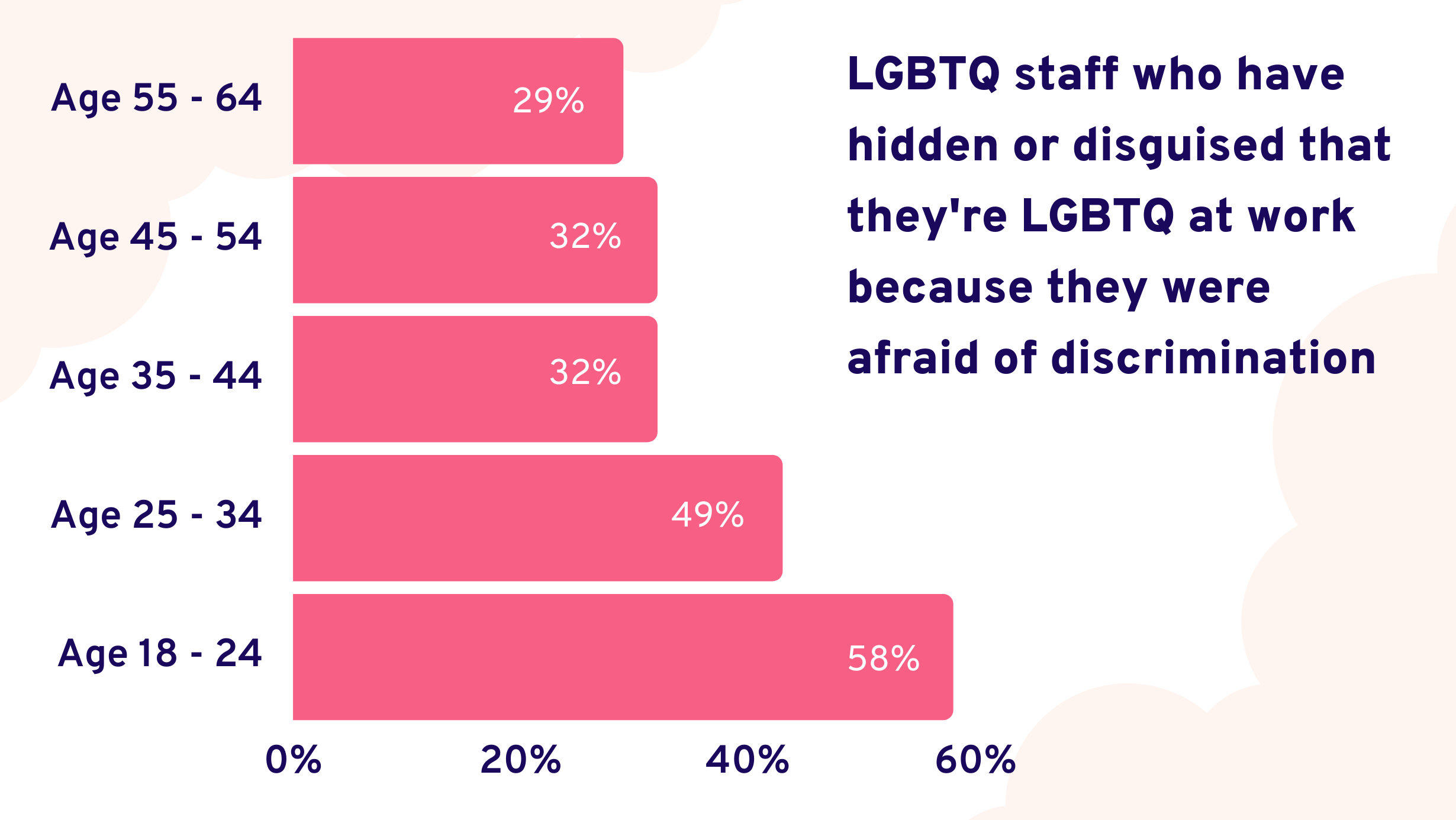
- More than a third of LGBTQ staff (35%) have hidden or disguised that they are LGBTQ at work in the last year because they were afraid of discrimination.
- One in eight lesbian, gay and bi people (12%) wouldn’t feel confident reporting any homophobic or biphobic bullying to their employer. One in five trans people (21%) wouldn’t report transphobic bullying in the workplace.
- Almost a third of non-binary people (31%) and one in five trans people (18%) don’t feel able to wear work attire representing their gender expression.

Abuse, harassment and exclusion
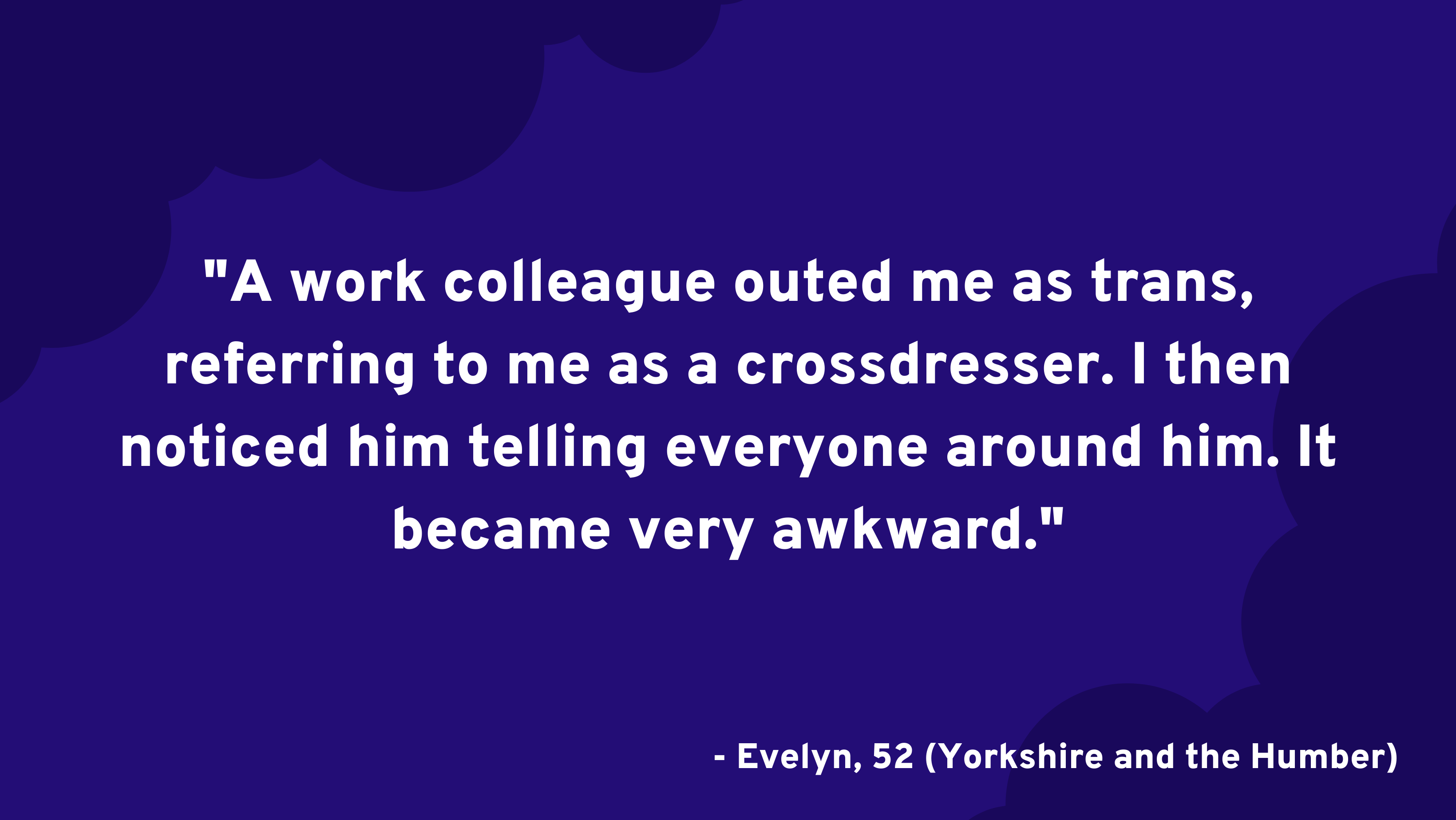
Many LGBTQ staff experience derogatory remarks from colleagues and customers, they’re actively excluded by their peers and some are even denied a job or promotion because of their sexual orientation and/or gender identity. An alarming number of trans employees, and Black, Asian and minority ethnic LGBTQ employees are physically attacked by someone at work.
Almost one in five LGBTQ employees have been the target of negative comments or conduct from work colleagues in the last year because they are LGBTQ. This includes being the target of derogatory remarks, experiencing bullying and abuse, and being outed without consent. This rises to a third of trans people and one in four LGBTQ disabled people.
Almost one in six trans people are still not addressed with their correct name and pronouns in their workplace.
Barriers to recruitment & promotion
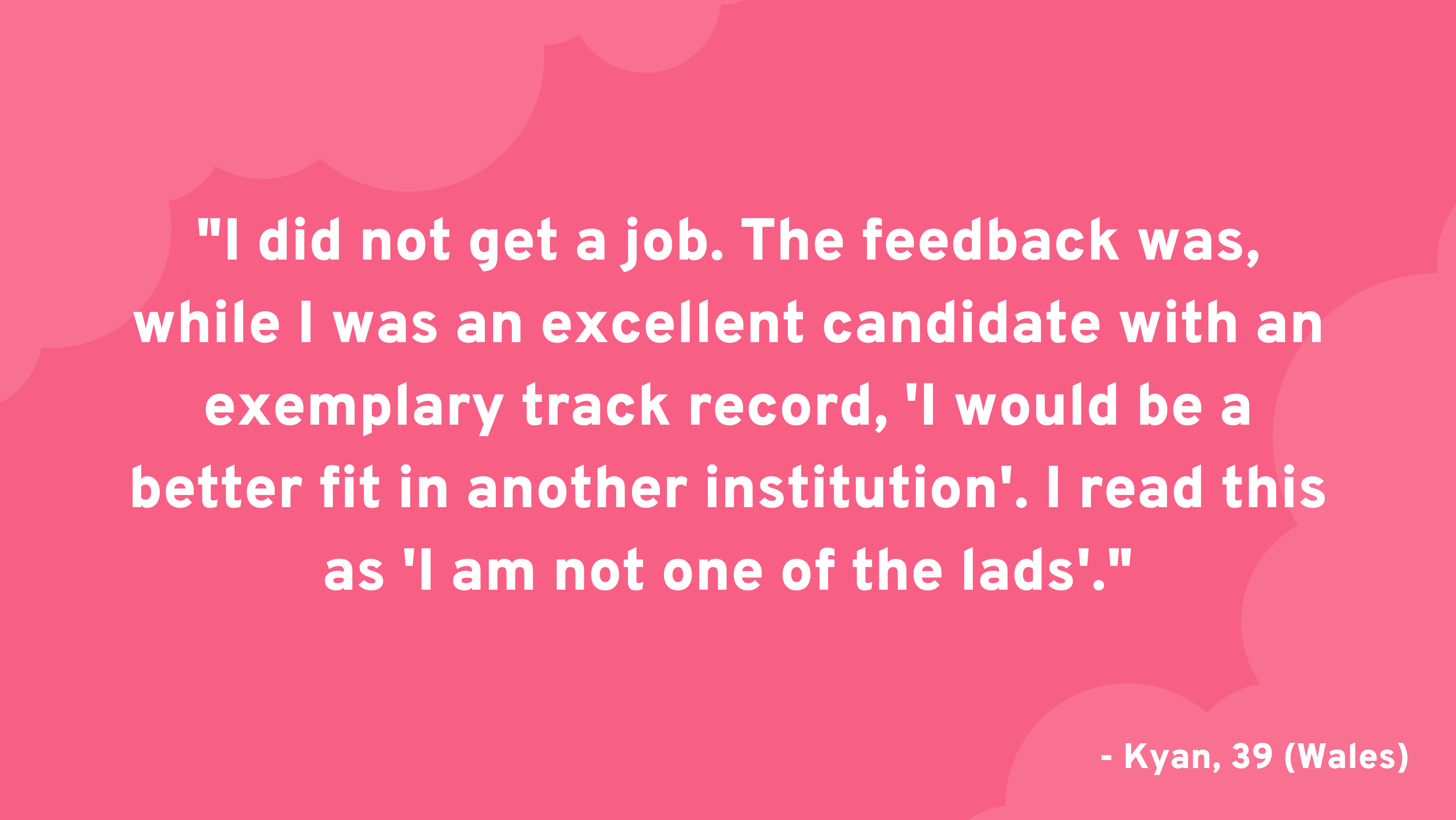
LGBTQ jobseekers are often face discrimination when applying for jobs. In fact, more than a third of LGBTQ people looking for work are worried about being discriminated against or harassed at work due to their sexual orientation or gender identity.
10% of LGBTQ employees say they didn't get a promotion they were up for at work because they're LGBTQ. This number rises to 24% of trans people, compared to 7% of LGBTQ people who aren’t trans. Black, Asian and minority ethnic LGBTQ staff are also more likely to get turned down for a promotion, as are LGBTQ disabled people, 19% and 16% respectively.
Twelve percent of Black, Asian and minority ethnic LGBTQ employees have lost a job in the last year because of being LGBTQ, compared to just 4% of white LGBTQ staff. Similarly, 11% of trans employees and 9% of LGBTQ disabled people say they have lost a job in the last year because of being LGBTQ.
Being ‘out’ at work
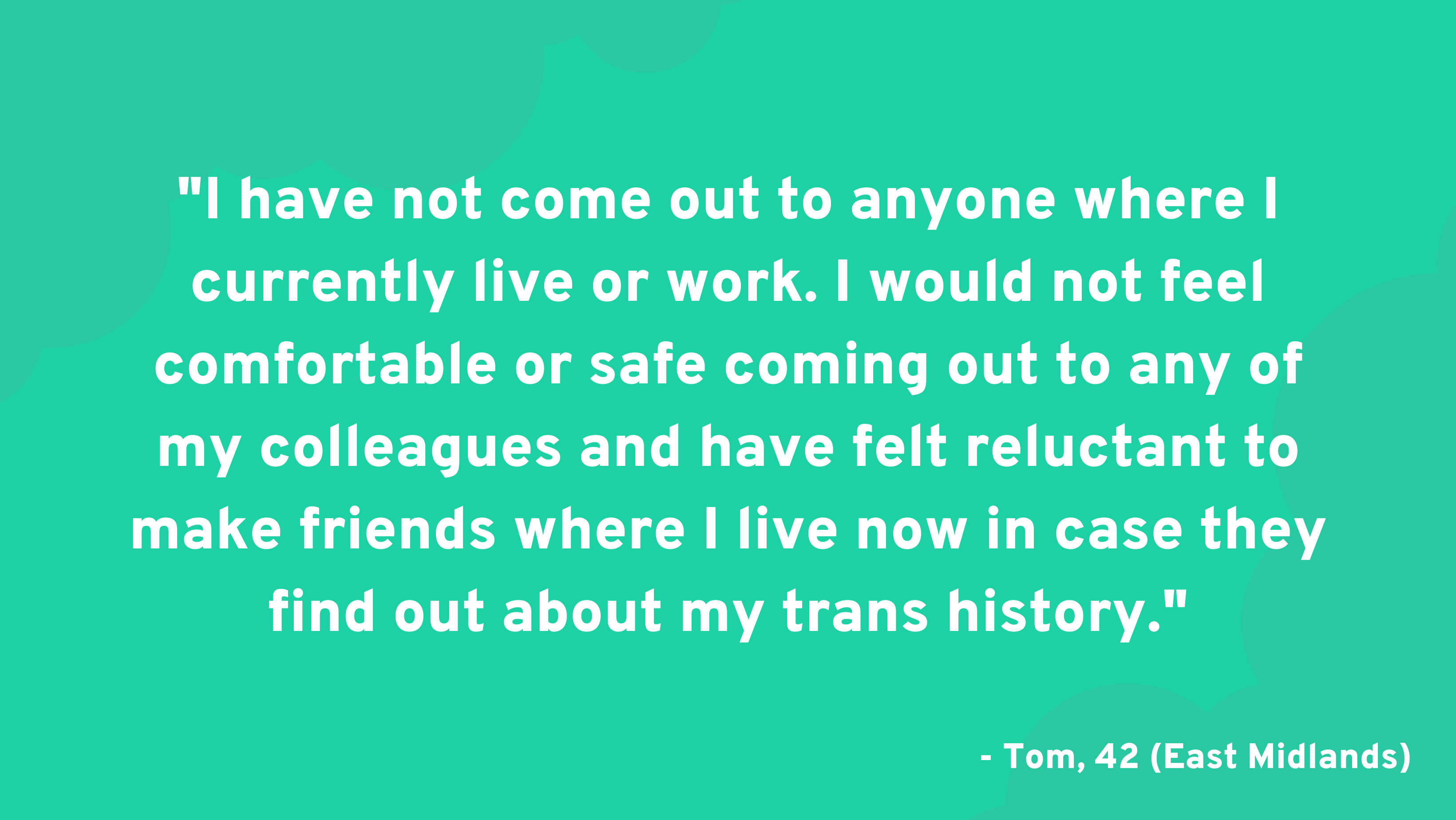
The majority of LGBTQ people still don’t feel able to disclose their sexual orientation and/or gender identity at work for fear of discrimination. Some have even been encouraged to hide their identity at work.
Nearly one in five lesbian, gay and bi people are not open with anyone at work about their sexual orientation. Almost two in five bi people aren’t out to anyone at work about their sexual orientation. One in four trans people aren’t open with anyone at work about being trans. This number increases to almost two in five non-binary people who aren’t out at work.
Sadly, many LGBTQ people say that they were encouraged to hide or disguise that they are LGBTQ by a work colleague.
One in eight LGBTQ people don’t feel able to wear work attire representing their gender expression.
Almost one in ten trans people don’t feel able to use the toilet they feel comfortable with.
Barriers to an inclusive workplace
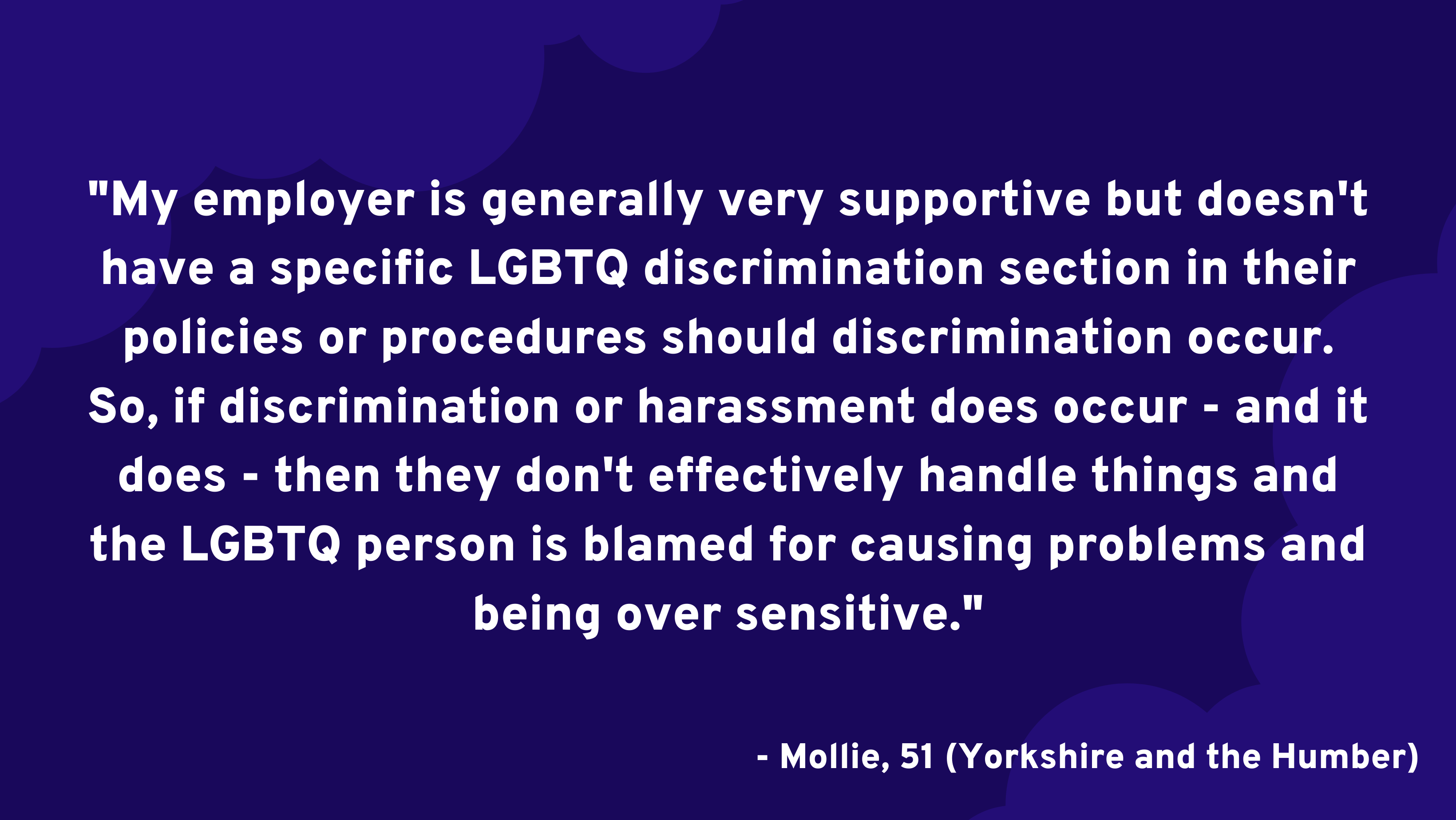
The best employers recognise the value in taking proactive steps to create inclusive workplace environments. But, all too often, LGBTQ employees still face barriers including little confidence in bullying reporting procedures, a lack of visible senior support for LGBTQ equality and inadequate policies.
Just 61% of LGBTQ staff agree that their workplace has equalities policies that protect lesbian, gay and bi people at work, however, fewer than half of LGBTQ staff agree that there are equalities policies in place to protect trans people at work.
Less than half of LGBTQ staff say that senior managers in their workplace demonstrate visible commitment to lesbian, gay and bi equality.
Only 28% of LGBTQ workers say that senior managers in their workplace demonstrate visible commitment to trans equality.
Employers who take active steps towards establishing inclusive work policies, by showing visible commitment to LGBTQ equality and showcasing best practice equality policies, have a real impact on the lives of LGBTQ staff, boost work morale and create a work environment that people are proud to work in.
As an employer what can you do to support your LGBTQ employees?
Develop clear policies
- Develop clear zero tolerance policies on homophobic, biphobic and transphobic discrimination and harassment, with clear sanctions for staff and customers.
- Actively communicate their equality policy to all staff and ensure that the route for reporting homophobic, biphobic and transphobic bullying in the workplace is clear.
Support staff through training
- Implement all-staff diversity and inclusion training, which explains what anti-LGBTQ discrimination or abuse might look like, why it is bad for business and how to challenge anti-LGBTQ attitudes among colleagues. Training should also provide staff with an understanding of multiple identities and inequality (for example, the dual discrimination that an LGBTQ, disabled staff member may face).
- Ensure that line managers have the appropriate training and support to confidently take a zero-tolerance approach to all homophobic, biphobic and transphobic abuse in the workplace.
Improve trans inclusion
- Run awareness raising sessions for all employees on trans inclusion, along with guidance about using pronouns and facilities.
- Develop a policy to support trans employees who are transitioning, including information on confidentiality, dress codes and using facilities, with related guidance for line managers. Use Stonewall’s resources for support, which are available at www.stonewall.org.uk/supporting-trans-staff-workplace
Recruit & promote diverse candidates
- Take steps to appeal to a diverse audience and attract diverse candidates to your business. At Flexa we encourage our Flexified partners to be as transparent as possible when talking about their work environment and company culture. Transparency promotes inclusivity and if you’re doing everything right, your efforts will attract diverse talent.
- Include statements and examples of their commitment to LGBTQ staff, equality and inclusion on their website. When advertising job roles, make sure that a commitment to diversity and inclusion in their workplace is clearly communicated.
- Develop clear policies around recruitment and promotion, using Stonewall’s workplace guides for support. Train their recruitment team to understand where discrimination against LGBTQ staff can occur in the recruitment process and how they can take steps to reduce bias.
Monitor staff diversity
- Collect diversity data on their workforce across pay and grade to identify any areas of discrimination in career progression based on sexual orientation and gender identity. Monitoring must be worded and formatted correctly. For example, when asking about gender, employees should be able to describe their gender in their own words.
- Collect diversity data in their exit process and ensure employees leaving the organisation have the space to raise LGBQ related issues. Staff involved in all diversity monitoring should have specific LGBTQ awareness training when collecting, analysing and reporting results.
Support LGBTQ role models
- Encourage and support the formation of an LGBTQ network group, so that LGBTQ employees have visible role models and peers. In smaller organisations employers should assist LGBTQ staff in joining an external network.
- Support staff members who have multiple protected characteristics (for example, are both LGBTQ and Black, Asian or minority ethnic) by facilitating collaboration between different network groups.
- Empower senior leaders to make visible commitments to LGBTQ equality through speaking at internal diversity events, authoring internal communications and meeting with the LGBTQ employee network group. This should also include senior sponsorship for the LGBTQ network.
- Support events like Pride and LGBTQ History Month and display LGBTQ friendly posters to show customers their business supports equality. Visit www.stonewall.org.uk for free resources.
Get involved with LGBTQ charitable organisations
- Stonewall are an excellent organisation with connections to over 750 LGBTQ organisations, numerous free resources and staff programmes to educate and promote LGBTQ employees.
- Join more than 750 organisations on Stonewall’s Diversity Champions programme, the UK’s leading best practice forum for employers on LGBTQ inclusion. Visit www.stonewall.org.uk/diversity-champions-programme for more information.
- Submit to Stonewall's Workplace Equality Index, a completely free benchmarking tool that helps to assess an organisation's progress on LGBTQ equality and functions as a framework for improving the experiences of LGBTQ staff.

What can you do as an individual?
Work with your employer
If you happen to witness any anti-LGBTQ incidents in your workplace, be sure to let your senior management or HR team know, so that they can tackle the issue and take action against those responsible.
Encourage your employer to be LGBTQ inclusive
- Feedback to your employer if current policies are not LGBTQ inclusive.
- Report any discrimination, harassment or abuse of LGBTQ staff in your workplace (from either customers or other members of staff) to your employer.
- Work with others in your workplace to set up an LGBTQ network group if one does not already exist.
- Join or work with your workplace’s trade union or staff consultative group and encourage them to provide feedback on LGBTQ inclusion to senior leaders.
- Encourage your employer to join Stonewall’s Diversity Champions programme or any other LGBTQ programmes.
- Get involved in Stonewall’s Come Out for LGBTQ campaign: www.stonewall.org.uk/comeoutforlgbt
Final thoughts
The majority of our time is spent at work and it’s a shame that a significant portion of Britain’s workforce feels unable to be themselves around their employers and colleagues.
Pretending to be someone you’re not must be exhausting, and it’s a great sadness when you think about all of the bright and beautiful personalities we must be missing out on, all because they feel the need to hide them away through fear of discrimination and abuse.
The LGBTQ community are some of the kindest, most open-minded and genuine people you could hope to meet and to be working alongside members of the community should be viewed as a privilege.
Pride Month is absolutely a time to be celebrating, but unless you’ve taken genuine steps towards creating an inclusive environment all year round, those social posts and temporary rainbow logos could easily be viewed as a shallow attempt at showing support in order to tick a box. In 2021, it’s time to ask yourself, are you a true ally?
You can read Stonewall and YouGov's full report here: https://www.stonewall.org.uk/lgbt-britain-work-report