

Essential, Not Optional: How Flexible Working Tackles Gender Inequality
The data is clear: flexible working is more inclusive working. And companies who are serious about DEI are embracing evolved ways of working.
2nd Apr 2024
Why flexible working is not just a women’s issue
Pre-pandemic, flexibility was seen primarily as a women's issue, often associated with working mums. It was uncommon to even think about flexible working arrangements, let alone request them. This resulted in negative perceptions and the belief that it hindered productivity, career progression, and development. Although this stigma still exists today (as evidenced by Alan Sugar's recent flexible working rant from his home office), things are evolving.
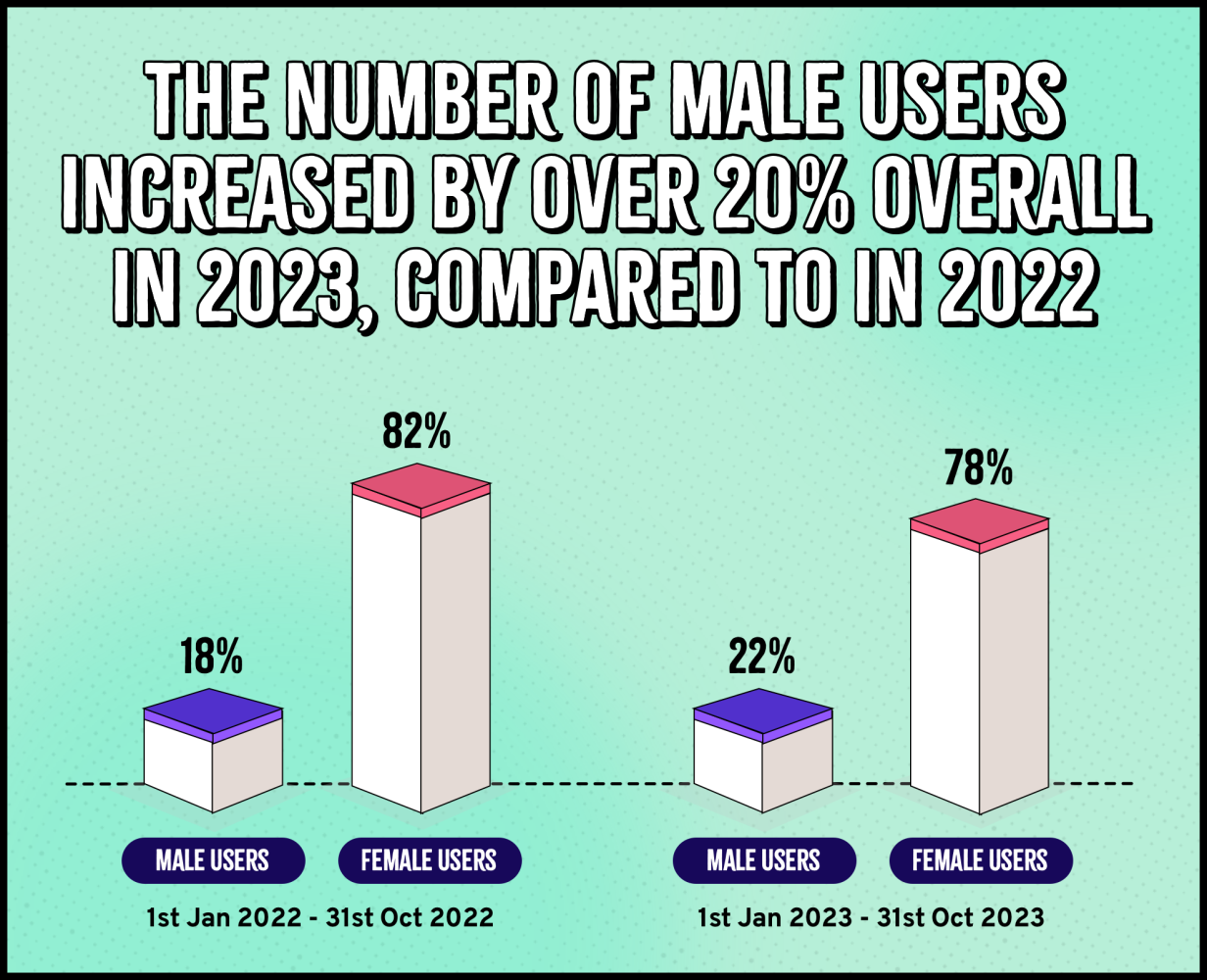
Fast forward four years, and it's not just women wanting flexibility, men do too. Our 2023/2024 Flexible Working report revealed a 20% increase in male candidates on Flexa, showing a growing interest amongst men for flexible working arrangements. Why is this significant? Well, as more men embrace flexible working not only are women supported more with childcare and caregiving responsibilities but also helps normalise flexible working practices. By doing this we can combat the discrimination between 'office' and 'flexible ' employees. This benefits women in advancing their careers while balancing family life, and allows more fathers to be actively involved in parenting and lead healthier lives all round.
Flexible working isn't exclusive to women or mothers. Until it becomes the standard for all genders, we jeopardise the earning potential and career growth of working mothers, which is unacceptable. Let's normalise flexible working for all in order to truly progress equality of all forms.
5 eye-opening stats that show why we can't ignore gender equality
When it comes to gender equality, we still have a long way to go. From pay disparities to limited opportunities and underrepresentation in leadership positions, it's clear that more work needs to be done.
The Trade Union Congress recently revealed some eye opening stats that show just how little progress has been made 👇
- The average woman must work 52 days in the year (nearly two months!) before she starts getting paid in comparison to the average man.
- Women aged between 50 and 59 have the highest pay gap (19.7%) and work the equivalent of 72 days for free, that’s from the start of the year until Monday 11 March 2024.
- Disabled women face the highest pay gap at 35% in comparison to non-disabled men, equivalent to £7144 a year.
- The pay gap varies by sector – the highest pay gap is in finance and insurance (27.9%). Even in female dominated sectors like education the pay gap is still high at 21.3%.
- Since 2011 the pay gap has been closing by only 0.4 percentage points a year – which means it will take until 2044 to close the gap.
- Women are 7 times more likely to be out of the labour market due to caring responsibilities, equivalent to 1.46 million women in comparison to 230,000 men. This rises to 12 times more likely for Black and Minority Ethnic women.
How flexible working can help women thrive
The truth of the matter is flexible working can no longer be a nice to have for companies looking to improve their gender diversity. When women have the flexibility to work how they want, they can better balance their professional and personal responsibilities. We all have our part to play in tackling gender inequality flexible working is a key ingredient that should not be overlooked.
In addition, flexible working empowers men to work in a healthier way that favours work life balance / integration / blend... whatever you want to call it. If we normalise flexible working as not just a "women's" problem then we can remove the stigma that has historically come with flexible working. If flexible working is normalised, we level the playing field for all.
Here are some of the ways flexible working is helping women thrive
💪 Fuels ambition & career progression : Flexible working allows women to pursue their career ambitions while maintaining their responsibilities outside of work. Research shows that in 2023, 80% of women expressed aspirations for higher positions, compared to 70% in 2019. Companies need to lean into this, making sure that women are able to realise these ambitions.
⚖️ Promotes better work-life balance : 38% percent of mothers with young children say that without workplace flexibility, they would have had to leave their company or reduce their work hours. By having the option to work when and how they want women can better balance their professional and personal lives more effectively, which in result leads to improved overall well-being and job satisfaction, and crucially keeping more women in the business.
❤️🩹 Support women’s healthcare in the workplace : Women face various health issues at work, including, and not limited to, menopause, period pain, infertility, and egg freezing. And let's face it, being stuck in an office whilst managing symptoms and side effects can make it even harder. Flexible working can make a real difference in how we handle these issues at work. Offering flexible work options, such as adjustable schedules or remote work, means women can manage symptoms more effectively and work in environments where they feel most comfortable and can still be productive.
5 flexible companies empowering women in the workplace
There are a lot of companies that love to shout about how important gender inequality is (your LinkedIn feed will heavily feature some of them today!), but very few are doing the work to create inclusive workplaces. Rather than being performative, it’s important for these companies to put the work in and create inclusive workplaces.
Here are some of our Flexa-verified companies that are actively demonstrating their commitment to helping women thrive.
⭐ HowNow - HowNow is a learning platform that is championing equal pay and leadership opportunities for women. HowNow has a robust salary benchmarking process which guarantees that pay is equal for men and women who perform the same role based on set criteria creating salary bands. Additionally, they actively promote gender diversity in leadership positions, with almost 50% of their emerging leaders being female and participating in leadership development programs.
⭐Attest - Attest is a consumer research platform that has some great initiatives in place to support women in the workplace. These include enhanced parental leave, Fertility Treatment and Family Planning Support Policy and Paid Leave for Pregnancy Loss which provides paid time off for persons carrying and their partners.
⭐Amplifi - Amplifi is a specialist consultancy that has diversity, equity and inclusion at the top of their agenda. Amplifi has seen this first hand, how flexibility can attract more diverse applicants. In the data and tech industry there is a huge gender disparity, and being part of Flexa has allowed them to reach equal representation in the team from men and women in 2023, with all of their female hires coming through Flexa.
⭐ProfitAbility - ProfitAbility is a game-based learning company that offers comprehensive parental leave policies that empower families to take the necessary time off during challenging situations. Their enhanced maternity pay not only supports mothers during their time off but also offers a return-to-work bonus, creating a supportive and inclusive workplace.
⭐Multiverse - Multiverse is a tech-first institution working hard to create game changing apprentice schemes. The company is proud to share that 55% of their UK team and 64% of their global leadership team are women.
4 ways to attracts and retain female talent
When it comes to bringing in diverse talent, there's still a lot of ground to cover. According to the Women’s Budget Group report, men are more likely to be in paid work than women. Although the gender employment gap is narrowing, women (72.1%) still lag behind men (78%). If you're serious about addressing gender inequality in the workplace, it's time to step up your game in recruiting and retaining female talent. Here are a few pointers to get you started 👇
- Define your commitment to inclusion: A good starting point is to define your company's inclusive values and mission statements. These will help you create a workplace that welcomes diversity and should be something everyone who already works for you, or is thinking of joining your company can easily see. It’s all well and good having gender equality targets but if you’re not clear on how you are going to achieve these goals you will struggle to recruit diverse talent.
- Remove bias from job descriptions: If you’re wanting to attract a more diverse pool of candidates your job descriptions should reflect this. Create job descriptions and messages that speak to a diverse group of candidates and emphasise a culture of fairness and equal opportunities. Maternity policies, childcare benefits, and flexible working options are likely to appeal to and engage women, so it's important to highlight them clearly on your job descriptions and careers pages. Also, stop using words like "ninja", "rockstar" and "wizard".
- Introduce flexible working policies: You can’t build an inclusive workplace without offering flexibility. Every one of us performs best in different environments, we all have different needs, likes, and our daily lives may be impacted by things such as disabilities, health conditions, childcare, family caregiving and many more. It's important to be upfront with exactly the type of flexibility you offer. The flexibility in your company shouldn't be exclusive or offered upon request; it should be accessible to all, and you can champion diversity by recognising that a one-size-fits-all approach doesn't work for everyone.
- Showcase your EVP : When it comes to attracting diverse talent it all circles back the all important EVP. I talk about how to use your EVP to attract aligned talent a lot. The reason being, it really is the key ingredient when it comes to attracting individuals who align with your company's values, goals, and culture. By emphasising what matters most to you (DEI, flexible working, mental health and so on), you can attract candidates who also value such attributes. By using an Employer Branding platform like Flexa you can clearly showcase your EVP and commitment to DEI. Verified companies like Hydrogen Group have witnessed remarkable results when doing this, with 76.4% of applicants in their hiring pipeline on Flexa being women.