

Beyond HR: making flexible working a leadership priority
In this blog we’re discussing how implementing a truly flexible work culture goes beyond the remit of HR and requires more than just a policy change; it demands a top-down approach that starts with leadership buy-in.
27th May 2024
When it comes to creating a flexible work environment, the role of leadership cannot be overstated. Leaders who embrace and model flexible working send a powerful message to their employees, normalising it as a core part of their company culture.
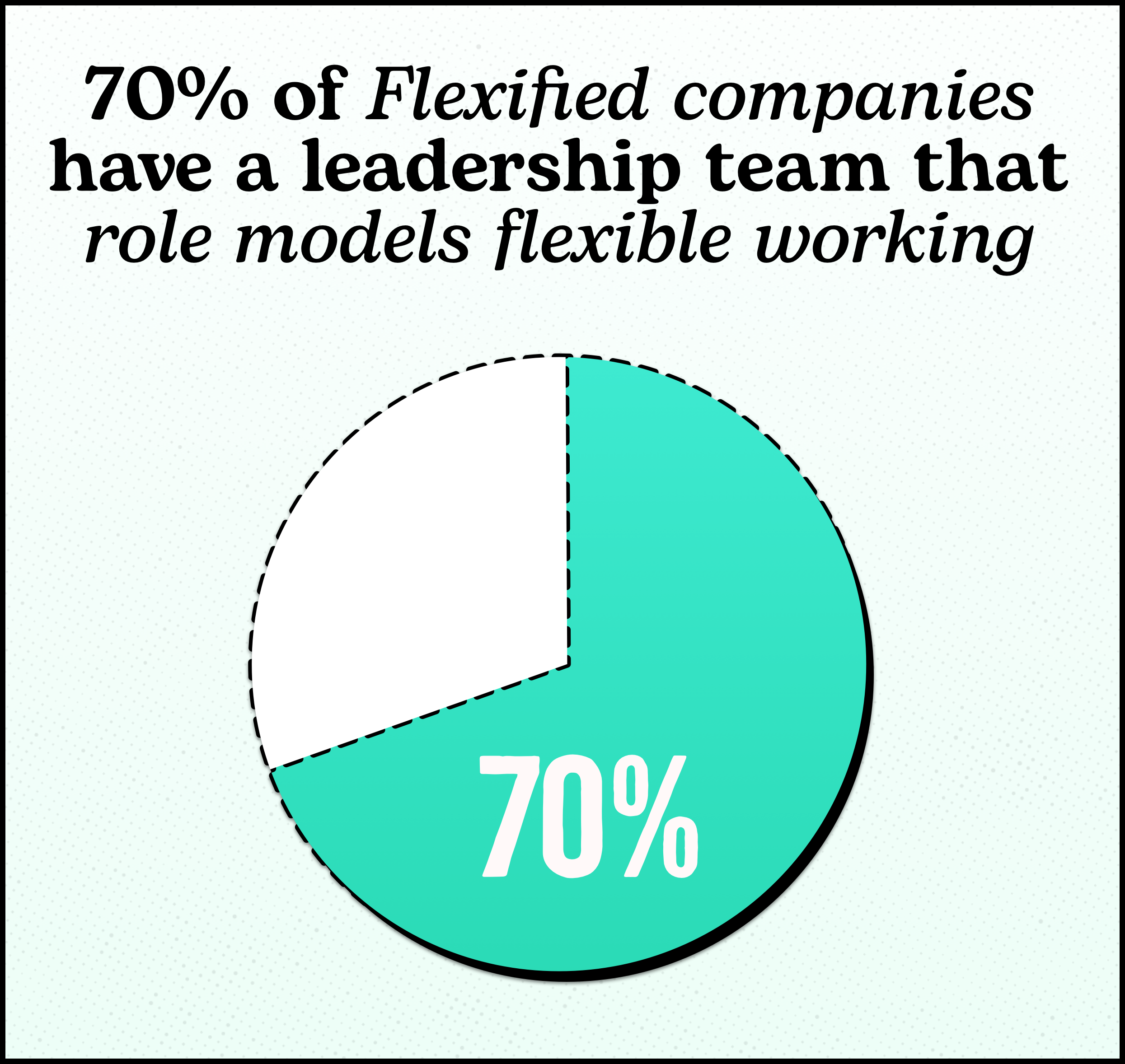
70% of flexified companies have a leadership team that role models flexible working
It’s all well and good to have an organisation and leadership team dedicated to flexible working, but it’s equally important to make it known to attract diverse talent that aligns with your values. Many of our Flexified companies leverage Flexa as a platform for this purpose, making it easier for them to attract top talent seeking genuinely flexible work environments. It's a chance to set your company apart and demonstrate your commitment to creating a culture that prioritises work-life balance.
As part of the Flexification process, we survey employees currently working at each company about their own experiences of their employer’s working environment. In order to standardise and compare fairly across different working environments, we ask perception-based questions, such as “When it comes to the flexible working culture at your company, how well do you think your senior leadership team role model and support flexible working?” Based on this score, companies can then feature this information on their profile, making it easier for candidates to filter by ‘Leadership team role modelling flexible work’.
Trust Keith, StoryBlok and ProfitAbility Business Simulation are among Flexified companies who score incredibly highly for their leadership team’s modelling flexible work.
Who is responsible for implementing flexible working in an organisation?
Implementing flexible working in an organisation is everyone's responsibility. While HR and People teams might develop the policies to make it happen, senior management needs to be on board to make sure it is normalised.
Managers need to adapt and advocate for their teams, ensuring flexibility works smoothly for everyone. Employees themselves also play a crucial role by being empowered to use flexible working arrangements and showcasing their benefits. When everyone—from top leadership to individual team members—actively participates, flexible working can truly become the norm, creating a more balanced and productive workplace for all.
Here is a quick breakdown of everyone who needs to be involved and the role they play:
Human Resources (HR) & People teams
- Develop policies and procedures for flexible working
- Manage compliance with legal requirements
- Provide training and resources for managers and employees
Senior management & leadership teams
- Support flexible working initiatives
- Lead by example and champion flexible working practices
- Create a culture that values work-life balance
Managers
- Adapt flexible working practices to meet team needs
- Focus on outcomes over hours
- Understand the motives behind team member’s flexible working needs
- Act as advocates for flexible working within their teams
Employees
- Use flexible working arrangements that align with their lifestyle
- Show the benefits of flexible working through performance.
- Provide feedback to improve and refine flexible working policies
Why leaders need to prioritise flexible working
A leadership team that prioritises flexible working can attract a wider pool of diverse talent who value work-life integration. By showcasing their commitment to flexible working, organisations can position themselves as employers of choice in an increasingly competitive market. When leaders embrace and model flexible working practices, they set a powerful example for the rest of the organisation. This not only normalises flexibility, but also means that it is taken more seriously across all levels.
Leaders who actively support flexible working demonstrate that they trust in their employees, leading to increased job satisfaction, higher productivity, and better employee retention. Ultimately, embedding flexibility into leadership is essential for creating a resilient, future-ready organisation.
Leaders need to prioritise flexible working to help with:
- Attracting diverse talent: prioritising flexible working helps leaders to attract a wider pool of diverse talent who value work-life integration.
- Gaining a competitive advantage: by showcasing their commitment to flexible working, organisations position themselves as employers of choice in a competitive market. This can differentiate them from competitors and appeal to top talent.
- Building trust: leaders who actively support flexible working demonstrate trust in their employees' ability to manage their work effectively regardless of location or schedule. This creates a positive work culture, leading to increased job satisfaction, higher productivity, and better employee retention.
- Creating a future-ready workforce: embedding flexibility into leadership is essential for creating a resilient, future-ready organisation. In a rapidly changing business landscape, the ability to adapt and accommodate diverse working preferences is crucial for maintaining agility and competitiveness.
4 ways to engage leadership teams with flexible working
To successfully implement a top-down approach to flexible working, it's crucial to get your leadership team on board. Here are some strategies to help you win over the decision-makers:
1. Present the business case: Flexibility isn't just about convenience; it's also a powerful tool for driving business success. Sharing data-driven insights that show how flexible working positively impacts productivity, engagement, and retention rates can really hit home with leaders. By showcasing increased productivity and improved employee satisfaction, you're painting a clear picture of how adopting a flexible work culture can be a win-win for both employees and the organisation.
2. Lead with empathy: Flexibility isn't just about numbers; it's about people. Encouraging leaders to approach flexible working with empathy can make all the difference. When they recognize that employees have different life responsibilities and challenges, they're more likely to create a supportive work environment. Sharing real-life stories of how flexible working has made a positive impact on people's lives can drive this message home. Whether it's a parent who can attend their child's school event or a caregiver who can better manage their responsibilities, these stories humanise the benefits of flexibility.
3. Encourage collaboration: Building a flexible working policy shouldn't just be a top-down decision; it should be a collaborative effort. By involving leaders in the process and seeking input from employees across the organisation, you're ensuring that the policy reflects the diverse needs and preferences of your workforce. This collaborative approach not only creates a sense of ownership and buy-in, but also leads to a more inclusive and effective flexible working policy that truly works for everyone.
4. Aligning with your DEI agenda: Flexible working isn't just about accommodating individual preferences; it's also a cornerstone of building a truly inclusive workplace culture. When advocating for flexible working, it's essential to emphasise how it aligns with your organisation's Diversity, Equity, and Inclusion (DEI) agenda. Flexible working promotes diversity by providing opportunities for individuals with different needs and circumstances to thrive in their roles. It enhances equity by ensuring that all employees, regardless of their personal situations, have access to work arrangements that suit them best.
5. Lead by example: Sometimes, actions speak louder than words. Encouraging your leadership team to lead by example means challenging them to embrace flexibility in their own work lives. When leaders practise what they preach and model flexible working practices, they send a powerful message to the rest of the organisation. By visibly prioritising work-life integration, leaders set the tone for a culture that values flexibility.
Do you need support building your EVP?
Led by Beth, Director of Growth and EVP Consultant at Flexa, our new masterclass distils years of research and expertise into an actionable EVP framework. You'll learn:
- What an EVP is and why it's so important in today's hiring landscape
- How to leverage data-driven insights to understand what top talent really wants
- The 7 key pillars of a strong EVP and how to identify your standout areas
- Step-by-step exercises to craft an authentic EVP that aligns with your culture
- Strategies for activating your EVP across channels like careers sites, job descriptions, and social media
- Best practices for engaging employees and promoting your EVP both internally and externally
Suitable for teams of any size, this course will ensure your EVP resonates across different departments and locations, creating alignment and consistency in your employer brand.
Once you have completed the Employee Value Proposition Masterclass, you'll receive a Flexa accredited certificate to celebrate your new expertise.
Access the course here.